
Have you ever reached the end of the day wondering where all your energy and good mood disappeared?
You started the morning feeling fine, but after answering emails, dealing with deadlines, sitting in traffic, or handling everyday responsibilities, happiness seemed to take a back seat. It’s a feeling many people know well. Life gets busy, and without realizing it, we stop doing the little things that make us smile.
The interesting part is that happiness isn’t something that only happens after getting a promotion, buying a new car, or taking a dream vacation. Those moments are wonderful, but lasting happiness usually comes from the small habits we practice every day.
The good news is that building happier days doesn’t require changing your entire life overnight. A few simple habits, practiced consistently, can improve your mood, reduce stress, and help you enjoy life more.
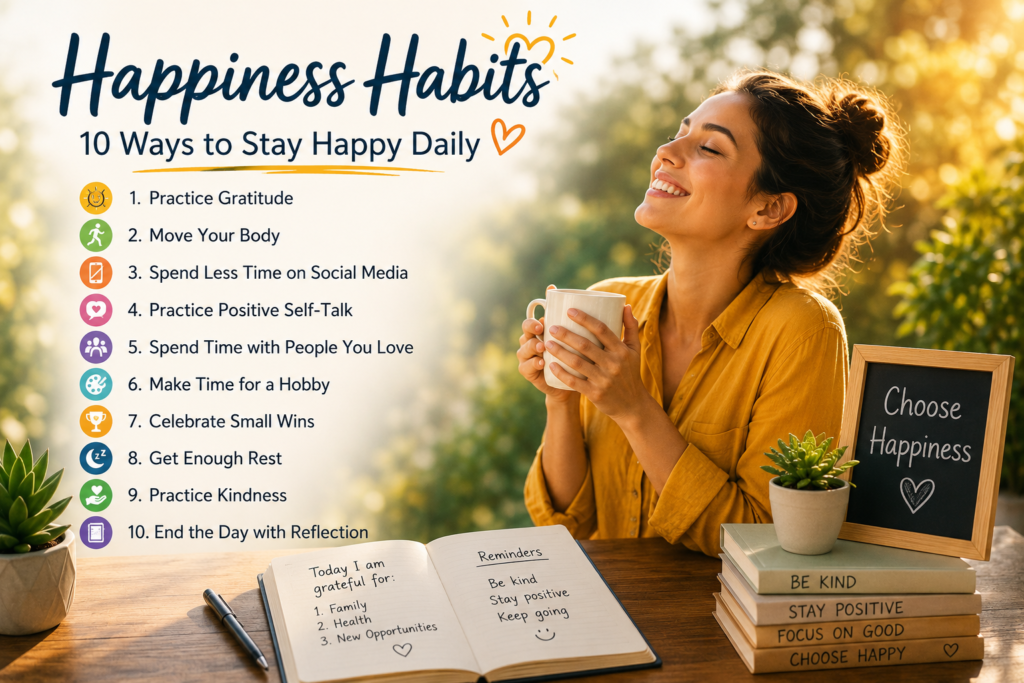
In this guide, you’ll discover ten practical happiness habits that are easy to follow and can make each day feel a little brighter.
Why Daily Happiness Matters
Happiness isn’t about being cheerful every second of the day. Everyone experiences difficult moments, setbacks, and stressful situations.
Instead, happiness is about creating a lifestyle where positive moments happen more often than negative ones.
When you regularly practice healthy habits, you’re more likely to:
- Feel less stressed
- Sleep better
- Build stronger relationships
- Stay motivated
- Improve your mental well-being
- Handle challenges more calmly
Think of happiness like a muscle. The more you practice healthy habits, the stronger it becomes.
1. Start Your Morning with Gratitude
The way you begin your morning often influences the rest of your day.
Instead of immediately checking social media or worrying about your schedule, spend a minute thinking about three things you’re grateful for.
They don’t have to be extraordinary.
You might appreciate:
- A good night’s sleep
- Your family
- Your health
- A warm cup of coffee
- A peaceful morning
- A supportive friend
Practicing gratitude helps shift your attention toward the positive things already present in your life.
2. Move Your Body Every Day
Exercise isn’t just about staying fit.
Physical activity releases chemicals that naturally improve your mood and energy levels.
You don’t have to spend hours in the gym.
Simple activities work just as well:
- Walking
- Cycling
- Yoga
- Dancing
- Stretching
- Playing a sport
Even twenty minutes of movement can help reduce stress and improve your outlook.
3. Spend Less Time on Social Media
Social media can be entertaining and informative, but spending too much time comparing your life to carefully edited highlights from others can leave you feeling dissatisfied.
Try setting small limits.
Instead of checking your phone every few minutes:
- Turn off unnecessary notifications.
- Keep your phone away during meals.
- Take short digital breaks throughout the day.
Many people notice they feel calmer and more focused after reducing screen time.
4. Practice Positive Self-Talk
We often speak to ourselves more harshly than we would speak to a close friend.
Instead of saying:
“I always mess things up.”
Try saying:
“I’m still learning, and every mistake teaches me something.”
Replacing negative thoughts with encouraging ones doesn’t ignore problems—it helps you approach them with confidence instead of fear.
5. Spend Quality Time with People You Care About
Strong relationships are one of the biggest contributors to long-term happiness.
You don’t need elaborate plans.
Simple moments matter:
- Eating dinner together
- Calling a family member
- Meeting a friend for coffee
- Playing with your children
- Having meaningful conversations
These connections create memories that last much longer than material possessions.
6. Make Time for a Hobby
As adults, many of us become so busy with work and responsibilities that we forget to do things simply because we enjoy them.
A hobby gives your mind a chance to relax and recharge.
Ideas include:
- Reading
- Photography
- Gardening
- Painting
- Cooking
- Playing an instrument
- Learning a new language
You don’t need to be an expert. The goal is enjoyment, not perfection.
7. Celebrate Small Wins
Many people wait until they’ve achieved something major before allowing themselves to feel proud.
Instead, celebrate progress along the way.
Finished an important task?
Completed a workout?
Learned something new?
Take a moment to acknowledge it.
Small victories build confidence and motivation.
8. Get Enough Rest
Busy schedules often make sleep feel optional.
In reality, good sleep supports both physical and emotional well-being.
Adults generally benefit from seven to nine hours of quality sleep each night.
A well-rested mind is more patient, focused, and better prepared to handle everyday challenges.
9. Practice Kindness
One of the easiest ways to improve your own mood is by helping someone else.
Kindness doesn’t have to cost money.
Simple gestures include:
- Smiling at someone
- Holding a door open
- Complimenting a coworker
- Helping a neighbor
- Thanking someone sincerely
Acts of kindness often create positive feelings for both the giver and the receiver.
10. End the Day with Reflection
Before going to bed, spend a few quiet minutes thinking about your day.
Ask yourself:
- What went well today?
- What made me smile?
- What did I learn?
- What can I improve tomorrow?
Reflection helps you appreciate progress instead of focusing only on what didn’t go as planned.
A Simple Daily Happiness Routine
Creating a happier life doesn’t require following a complicated schedule. Often, it’s the small actions repeated every day that make the biggest difference.
Here’s an example of a simple daily routine you can adapt to your own lifestyle.
7:00 AM – Wake up and think of three things you’re grateful for.
7:15 AM – Stretch, walk, or do a short workout.
7:45 AM – Enjoy a healthy breakfast without checking social media.
9:00 AM – Begin your most important task with a positive mindset.
1:00 PM – Take a proper lunch break and get some fresh air.
5:30 PM – Finish work and disconnect from emails.
6:30 PM – Spend time with family or friends.
8:00 PM – Enjoy a hobby such as reading, cooking, or gardening.
10:00 PM – Reflect on your day and prepare for a restful night’s sleep.
Remember, your routine doesn’t have to be perfect. The goal is consistency, not perfection.
Helpful Apps That Can Support Daily Happiness
Technology can become a useful partner when it’s used intentionally. These apps can help you build positive habits and stay mindful throughout the day.
Headspace
Offers guided meditation sessions, breathing exercises, and mindfulness practices for beginners and experienced users alike.
Calm
Provides relaxing music, sleep stories, meditation sessions, and breathing exercises to reduce stress.
Day One Journal
A digital journal that makes it easy to record your thoughts, gratitude, and daily reflections.
Google Keep
Perfect for writing gratitude lists, reminders, and positive affirmations.
Notion
Create a personal happiness tracker, daily habit checklist, or gratitude journal in one organized workspace.
Todoist
Reduce stress by organizing your daily tasks into manageable priorities.
Choose one or two apps that fit naturally into your routine instead of trying to use everything at once.
Common Mistakes That Can Reduce Happiness
Even with good intentions, certain habits can slowly affect your mood and overall well-being.
Constantly Comparing Yourself to Others
Everyone has a different journey.
Comparing your progress to someone else’s highlights can make you overlook your own achievements.
Instead, focus on becoming a better version of yourself than you were yesterday.
Ignoring Your Physical Health
Your body and mind work together.
Poor sleep, unhealthy eating habits, and a lack of exercise can all influence your emotional well-being.
Taking care of your physical health is one of the simplest ways to support your happiness.
Waiting for the “Perfect Time”
Many people postpone happiness until they reach a certain milestone.
“I’ll be happy when I get a promotion.”
“I’ll be happy when I buy a house.”
While goals are important, lasting happiness grows from appreciating the present while working toward the future.
Spending Too Much Time Online
Constant notifications and endless scrolling can leave you feeling mentally exhausted.
Consider setting aside device-free time each day to reconnect with yourself and the people around you.
Being Too Hard on Yourself
Nobody gets everything right all the time.
Mistakes are part of learning and growing.
Treat yourself with the same patience and kindness you would offer a close friend.
Tips for Staying Positive During Difficult Times
Life isn’t always easy, and happiness doesn’t mean ignoring challenges.
When difficult moments arise, these habits can help you stay grounded:
- Accept that bad days are normal.
- Focus on what you can control.
- Break large problems into smaller steps.
- Ask for support when you need it.
- Spend time outdoors whenever possible.
- Practice deep breathing during stressful situations.
- Remember that setbacks are temporary.
Staying positive doesn’t mean pretending everything is perfect. It means believing that difficult moments can be managed and that better days are ahead.
Small Daily Habits That Make a Big Difference
Sometimes the smallest actions have the greatest impact over time.
Try adding a few of these habits to your day:
- Smile more often.
- Drink enough water.
- Read a few pages of a good book.
- Listen to uplifting music.
- Spend a few minutes in nature.
- Compliment someone sincerely.
- Keep your workspace tidy.
- Laugh whenever you can.
- Limit negative news consumption.
- Celebrate every small achievement.
Individually these habits may seem simple, but together they can create a more positive and balanced lifestyle.
Final Thoughts
Happiness isn’t something that appears overnight, and it isn’t reserved for people with perfect lives. It’s often built through small choices made consistently—choosing gratitude over complaints, movement over inactivity, connection over isolation, and progress over perfection.
You don’t need to adopt all ten habits at once. Start with one or two that feel realistic, practice them daily, and gradually add more as they become part of your routine. Over time, these simple actions can help you develop a more positive mindset and enjoy life’s everyday moments.
Remember, happiness isn’t about avoiding challenges. It’s about creating habits that help you navigate those challenges with resilience, optimism, and confidence. The little things you do each day can shape not only how you feel today but also the kind of life you build for the future.