
Have you ever opened Instagram for “just five minutes” and somehow ended up scrolling for nearly an hour? You put your phone down, but instead of feeling entertained, you feel strangely drained. Suddenly, you’re comparing your life, appearance, career, or relationships to people you’ve never even met.
If this sounds familiar, you’re not alone.
Social media has made it easier than ever to stay connected, discover new ideas, and share life’s special moments. But it has also created a space where endless comparison, unrealistic expectations, and the pressure to keep up can quietly affect our mental well-being.
Many people experience what is often called Instagram anxiety—the stress, self-doubt, or fear that can develop after spending too much time comparing themselves to carefully edited online content.
The good news is that you don’t have to quit social media completely to protect your mental health. By building healthier digital habits, you can continue enjoying social platforms without letting them control your mood or self-esteem.
In this guide, you’ll learn why Instagram anxiety happens, how it can affect your daily life, and practical ways to create a healthier relationship with social media.
What Is Instagram Anxiety?
Instagram anxiety isn’t an official medical diagnosis. Instead, it describes feelings of stress, insecurity, or sadness that some people experience while using social media.
These feelings often come from:
- Comparing yourself with others.
- Feeling pressure to look perfect.
- Chasing likes and comments.
- Fear of missing out (FOMO).
- Spending too much time scrolling.
- Constant exposure to idealized lifestyles.
Most people only share their happiest moments online. Vacations, celebrations, achievements, and perfectly edited photos become the highlight reel that others compare their everyday lives against.
Why Social Media Can Affect Mental Health
Social media isn’t inherently bad.
The problem often comes from how we use it.
When scrolling becomes a daily habit without limits, it can affect the way we think about ourselves.
Some common effects include:
- Lower self-confidence
- Increased stress
- Poor concentration
- Reduced productivity
- Difficulty sleeping
- Feeling left behind
- Negative body image
Recognizing these effects is the first step toward making healthier choices.
Signs That Social Media May Be Affecting You
Sometimes the impact builds gradually.
You may notice that:
- You check Instagram immediately after waking up.
- You compare your appearance to influencers.
- You feel disappointed with your own life after scrolling.
- You constantly refresh notifications.
- You feel anxious when your posts receive fewer likes.
- You spend hours online without realizing it.
- You struggle to enjoy the present because you’re thinking about posting it.
If several of these sound familiar, it may be time to adjust your social media habits.
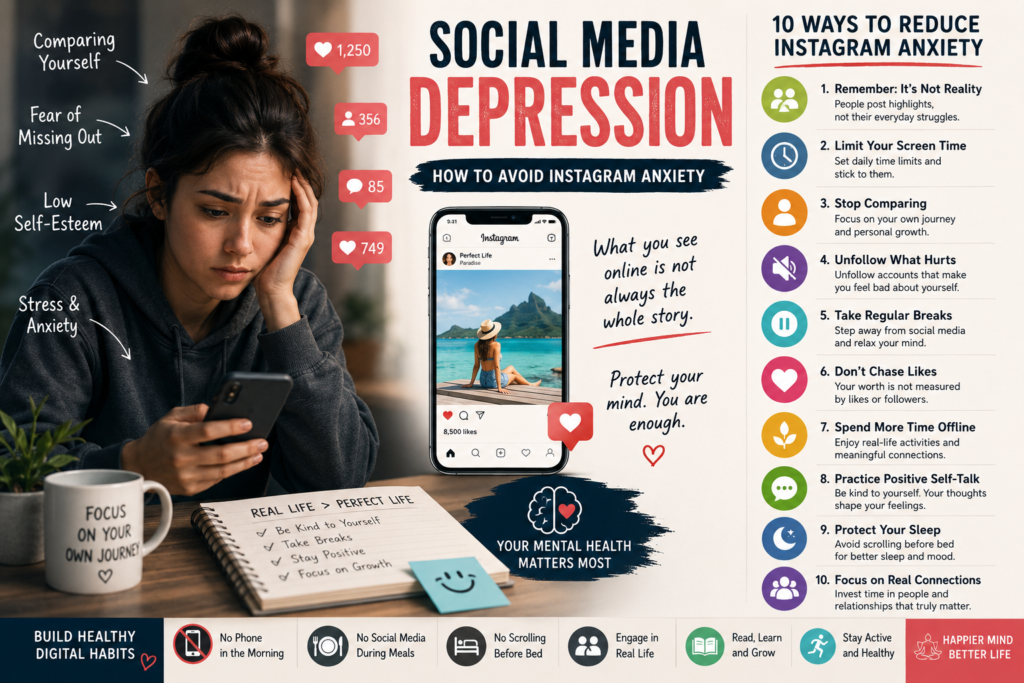
1. Remember That Social Media Shows Highlights, Not Reality
One of the biggest traps is believing that everyone’s life is perfect except yours.
In reality, most people share:
- Vacations
- Celebrations
- Promotions
- Beautiful meals
- Edited photos
- Happy moments
They rarely post:
- Stress
- Financial worries
- Relationship problems
- Failures
- Lonely days
- Everyday routines
Comparing your real life to someone else’s highlight reel is never a fair comparison.
2. Limit Your Daily Screen Time
Most smartphones now include built-in screen time tracking.
Try setting realistic limits.
For example:
- Instagram: 30–45 minutes per day.
- Social media-free meals.
- No scrolling before bedtime.
- No phone during conversations.
Small boundaries can make a big difference over time.
3. Stop Comparing Your Journey
Everyone moves through life at a different pace.
Someone buying a house at 25 doesn’t mean you’re behind.
Someone traveling every month doesn’t mean your life lacks value.
Instead of comparing your progress with others, ask yourself:
“Am I growing compared to last year?”
That’s a much healthier comparison.
4. Unfollow Accounts That Make You Feel Worse
Not every account deserves your attention.
If someone consistently leaves you feeling anxious, insecure, or unhappy, it’s okay to unfollow or mute them.
Instead, follow accounts that inspire, educate, or genuinely make you smile.
Your social media feed should support your well-being—not damage it.
5. Take Regular Digital Breaks
You don’t have to delete Instagram forever.
Sometimes taking a short break is enough.
Try:
- One phone-free evening each week.
- A social media-free Sunday.
- One hour without screens before bed.
- Leaving your phone in another room while working.
Many people notice improved focus and lower stress after spending time away from constant notifications.
6. Stop Chasing Likes and Followers
Likes and follower counts don’t measure your worth.
Social media algorithms constantly change, and engagement levels naturally fluctuate.
Instead of asking:
“How many people liked my post?”
Ask:
“Did I enjoy creating and sharing it?”
That shift in mindset can reduce unnecessary pressure.
7. Spend More Time in the Real World
The best antidote to excessive scrolling is real-life experiences.
Instead of reaching for your phone every free moment, try:
- Walking outdoors.
- Reading a book.
- Meeting a friend.
- Exercising.
- Learning a new skill.
- Spending time with family.
Real experiences often create longer-lasting happiness than endless scrolling.
8. Practice Positive Self-Talk
Social media can sometimes trigger harsh self-criticism.
When negative thoughts appear, replace them with kinder ones.
Instead of saying:
“I’m not successful enough.”
Try:
“I’m making progress at my own pace.”
Small mindset changes can reduce comparison and build confidence.
9. Protect Your Sleep
Scrolling late at night can make it harder to relax and fall asleep.
Try creating a bedtime routine that doesn’t involve your phone.
For example:
- Read a few pages of a book.
- Listen to calming music.
- Write in a journal.
- Practice deep breathing.
Better sleep often leads to better emotional well-being.
10. Focus on Real Connections
Having thousands of followers doesn’t automatically create meaningful relationships.
Spend more time strengthening connections with people who truly matter.
A genuine conversation with a friend often provides more happiness than hours of scrolling.
Healthy Daily Social Media Habits
Building a healthier relationship with social media doesn’t mean deleting every app on your phone. Instead, it’s about using these platforms intentionally rather than letting them consume your time and attention.
Here are a few habits that can make a noticeable difference:
Start Your Morning Without Instagram
Instead of opening Instagram as soon as you wake up, spend the first 20–30 minutes of your day doing something positive.
You could:
- Drink a glass of water.
- Stretch for a few minutes.
- Read a book.
- Write in a journal.
- Plan your day.
Starting your morning this way helps you focus on your own priorities instead of everyone else’s updates.
Set Specific Times for Social Media
Rather than checking Instagram every few minutes, decide when you’ll use it.
For example:
- 15 minutes during lunch.
- 20 minutes after work.
- 15 minutes in the evening.
Having clear boundaries prevents endless scrolling.
Follow Content That Adds Value
Your feed should leave you feeling inspired, informed, or entertained—not anxious.
Consider following accounts about:
- Personal development
- Fitness
- Healthy cooking
- Business and entrepreneurship
- Photography
- Travel
- Books
- Educational content
If an account consistently makes you feel inadequate, it’s perfectly okay to unfollow or mute it.
Share Moments Instead of Chasing Perfection
Not every photo needs professional editing.
Not every post needs hundreds of likes.
Social media should be a place to share experiences, not compete for approval.
Authenticity is often more meaningful than perfection.
Helpful Apps for Digital Well-Being
Technology can also help you create healthier digital habits.
Digital Wellbeing (Android)
Track screen time, set app timers, and create focus modes to reduce distractions.
Screen Time (iPhone)
Monitor your daily phone usage and limit time spent on specific apps.
Forest
Stay focused by growing virtual trees while avoiding your phone during work or study sessions.
Freedom
Blocks distracting websites and apps across multiple devices.
Headspace
Offers guided meditation sessions that can help reduce stress and improve mindfulness.
Calm
Provides relaxing music, breathing exercises, and sleep stories to support better mental well-being.
Using just one or two of these tools consistently can make social media feel less overwhelming.
Common Mistakes to Avoid
Comparing Your Behind-the-Scenes to Someone Else’s Highlights
Everyone has struggles they don’t post online.
Remember that you’re only seeing a carefully selected part of someone else’s life.
Measuring Your Worth Through Likes
The number of likes or followers you have doesn’t define your value as a person.
Meaningful relationships and personal growth matter far more than social media metrics.
Following Too Many Accounts
A cluttered feed filled with content that doesn’t benefit you can quickly become mentally exhausting.
Take time every few months to review who you’re following.
Using Social Media Out of Boredom
Many people open Instagram automatically whenever they have a free moment.
Instead, try alternatives such as:
- Reading a few pages of a book.
- Taking a short walk.
- Listening to music.
- Practicing a hobby.
- Calling a friend.
Small changes like these can reduce mindless scrolling.
Ignoring Your Mental Health
If social media regularly leaves you feeling anxious, overwhelmed, or persistently low, it may be helpful to take a longer break and talk with someone you trust. If those feelings are intense, long-lasting, or interfere with daily life, consider reaching out to a qualified mental health professional.
Seeking support is a sign of self-care, not weakness.
Building Confidence Offline
One of the best ways to reduce Instagram anxiety is by creating a fulfilling life away from your phone.
Try spending more time on activities that help you grow and feel accomplished.
Ideas include:
- Learning a new skill
- Joining a fitness class
- Volunteering
- Reading regularly
- Spending time outdoors
- Practicing mindfulness
- Meeting friends in person
- Working toward personal goals
As your confidence grows in real life, you’ll often feel less pressure to seek validation online.
A Balanced Daily Digital Routine
Here’s an example of a healthy approach to social media.
7:00 AM – Wake up without checking your phone.
8:00 AM – Focus on work or study.
12:30 PM – Spend 15 minutes checking social media.
3:00 PM – Keep your phone away while working.
6:00 PM – Exercise or enjoy a hobby.
8:00 PM – Catch up with friends or family.
9:30 PM – Put your phone away and relax.
10:30 PM – Go to sleep without late-night scrolling.
This routine isn’t about avoiding social media completely. It’s about making room for the rest of your life, too.
Final Thoughts
Social media is a powerful tool, but it should support your life rather than control it. Instagram can be a place to discover ideas, connect with people, and express creativity, yet it’s important to remember that what you see online is only a small part of someone’s reality.
By setting healthy boundaries, limiting screen time, following positive content, and focusing on meaningful experiences offline, you can enjoy social media without letting it harm your confidence or peace of mind.
You don’t have to make every change at once. Start with one simple habit—such as putting your phone away before bed or unfollowing accounts that make you feel worse—and build from there. Over time, these small decisions can help you create a healthier relationship with Instagram and a happier, more balanced daily life.